Silent Hill 2: Reflection of Themes
- jesseillanes
- Feb 2, 2023
- 14 min read
Forget the usual introductions and theatrics that are accustomed to any format that talks about video games in length, like video essays on YouTube or even blogs like these. Silent Hill 2 is a work of art. This is my experience on what the game means to me.

Every year, I try to start a series/franchise I never got around to, usually around the first half of the year to give myself leeway to finished said franchise. I picked up Silent Hill due to how it kept coming up in friend's conversations, not just with regard to horror games, but as one of the all-time greatest games of all time. I tend to start with a series in chronological order from release dates, and play the original versions of games if there are remakes present. Likewise, I started with Silent Hill (1998) on the original PlayStation. Likewise, I generally thought it had good ideas such as the atmosphere, the music being paired wonderfully with the scenes, and the story provided throughout the game. I couldn't help to compare it to the Resident Evil series and its early games that were also on PS1, but ultimately liked the first Silent Hill for what it was, a truly "psychological" horror game. I was aware of the games around the time of the release as a kid because of the 2006 movie, but I was way too young to play them or even understand the story, now in 2022 I finally got around to the series after years of going through my various other games in my backlog.
Silent Hill 2 was an experience I'll never forget as the impact, tone, and themes provided for the story is frankly astonishing for a game that was originally released in 2001. The extremely graphic and heavy themes can very easily be upsetting as they are real world situations that the game's story alludes to such as the loss of a family member, murder, and even physical and sexual abuse; however Team Silent, consisting of developers that were originally thought at the C or D-Team tier of developers at Konami (the game's publisher) before the first game being developed, provided an extremely tasteful and intriguing way to portray these topics in such a beautiful story.
That being said, this post will contain SPOILERS as I will identify and analyze the themes from the plot of the game. If you have the means of playing this game (a low to average level PC will do), please don't miss out on playing this game for yourself. I'll mainly go over the themes, characters, and meanings of them and what I thought was going on during the process of playing through the game.
INTRODUCTION
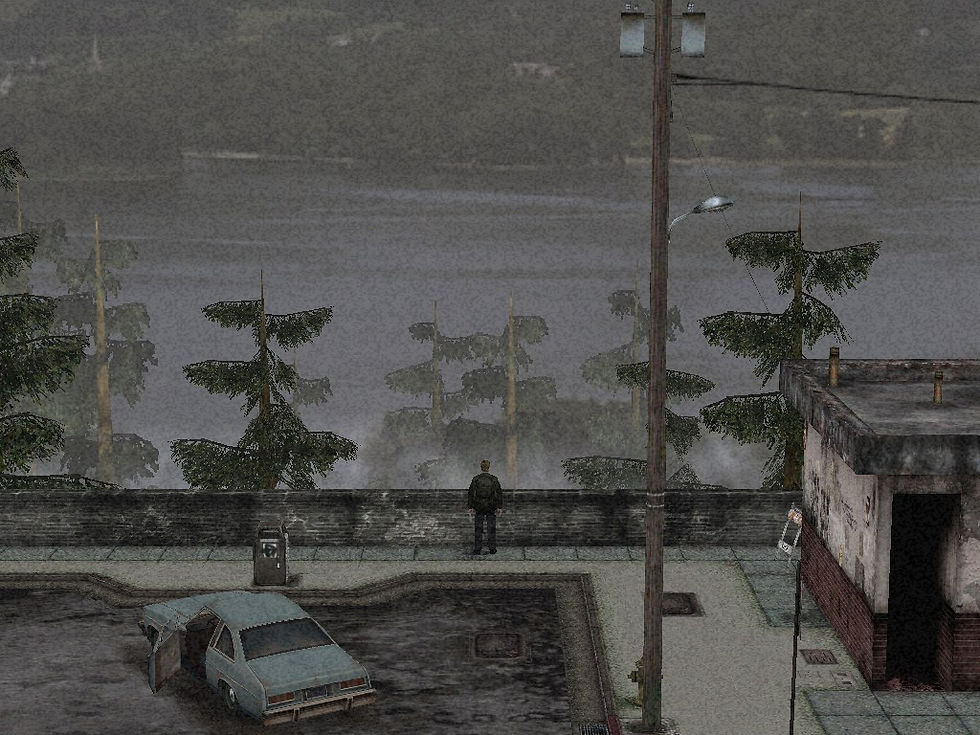
I was surprised from the moment I started the game. The game begins with the protagonist James, looking at his reflection in a public restroom's mirror (the cover image of this post), almost trying to discern reality for himself. As he touches his face and scans his look, I immediately thought James was intoxicated in some way, as touching your face to see if it's numb is usually what people do to check their "high" from whatever they have taken. We then learn that James has arrived to Silent Hill because he received a letter from Mary, his late wife, to "return to their special place". James is distraught with the letter as mentioned, his late wife, who has died from an illness three years prior to receiving the letter, is suddenly wanting to "meet" James again. In the game, Silent Hill is known as an eerie town with inexplicable occurrences such as a large amount of people missing and people claiming creature sightings, but this doesn't deter James as the chance of his late wife being alive after facing years of depression is what moves him into this psychological struggle with himself.
CHARACTERS
The game centers around James Sunderland. An every man (which becomes a trope of most Silent Hill games' protagonists) who seems "out of it" to say the absolute least. It is said that James is 29 years old but to me, I thought he might've been at least 40 years old. Due to the features from his face like wrinkles and such, I believe that his "youthful" appearance is gone because of the passing of his beloved Mary, and the constant stress and anguish he has dealt with through the years of Mary's illness, and the years following her passing. The "every man" archetype is common in video games but, Silent Hill 2 excels at this as you are supposed to relate in the beginning of the character's arch, since you don't know much about him, but by the end of the experience, you end up feeling sympathetic and emotional when James faces his own psychological horrors essentially from his design...
A grand aspect of the game's setting and presentation all revolves around the psychological and emotional suffering James has faced in losing Mary, and this is all reflects from everything from the people he meets in Silent Hill, to the many creatures and monsters James fights through in Silent Hill.
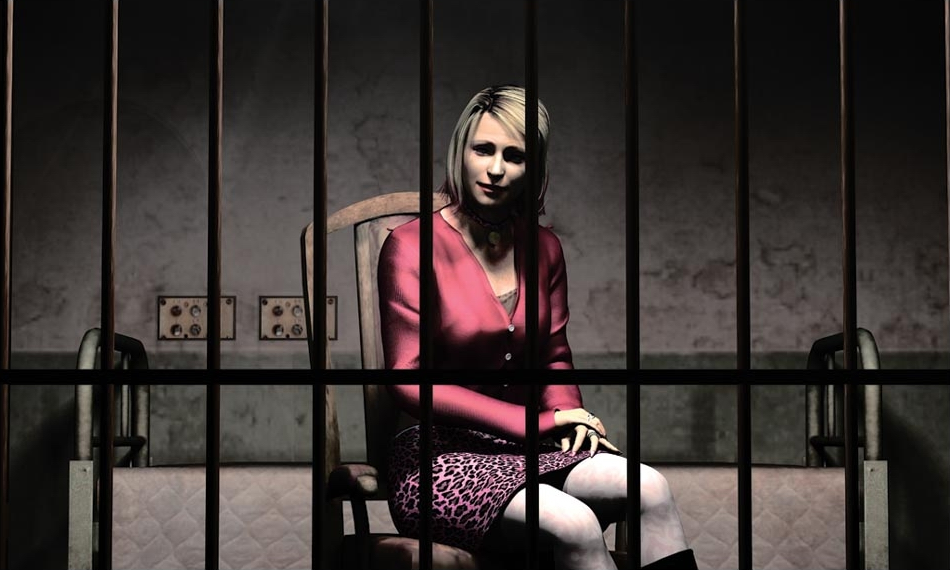
To start, one of the main supporting characters that James meets in his trek in discovering if Mary's letter is real, is a promiscuous woman named Maria. James almost mistakes Maria as Mary, as James claims, "you can be her twin!" Maria appears identical in features to Mary but is wearing a very revealing outfit such as wearing a mini skirt, with a cardigan, exposing her midriff and a butterfly tattoo on her lower right hip. Maria then asks (nearly seduces) for James to protect her in the town full of monsters, thus making Maria a main supporting character. Maria is commonly seen as a manifestation of James' sexual desires that were suppressed as Mary was in the hospital trying to recover from her illness. This is apparent with her revealing outfit, but also the outcome of Maria, which involves her dying in front of James, being killed by the infamous "Red Pyramid Thing," oddly multiple times as Maria gets killed in front of James, but reunites with James stating, "you don't remember? We got separated in the elevator hall..." The constant death and murder of Maria alludes to the fate of Mary, James' wife which is vital to arguably, the game's best ending. When discussing the death of Maria, it is hard to not discuss the various enemies that James faces in his journey in Silent Hill.
The many "enemies" that James faces are psychological manifestations of his suffering, with the most infamous creature being officially known as the "Red Pyramid Thing" or more colloquially known as "Pyramid Head." Pyramid Head is such a vicious force as you are introduced to him as almost being statue like behind a hallway barricade, where he is glowing red. James is formally introduced to him as he searches an abandoned apartment complex, he hears rustling so he hides in a nearby closet, seeing the Pyramid Head appear to be performing an intimate act with one of the other game's creatures known as "Mannequin" which can be loosely described as a pair of mannequin legs that had another pair of legs on top, wearing stockings, which also is a manifest of James' desires. Pyramid Head is also used as multiple boss fights, with the culmination of the game fighting two Pyramid Heads, with spears as the penultimate final bosses. After they kill Maria for the final time, they fight James, but after multiple shotgun or rifle blasts from him, they commit suicide with their own spears. It is hard to talk about Pyramid Head without talking about the game's various endings, so we'll get back to Pyramid Head later...
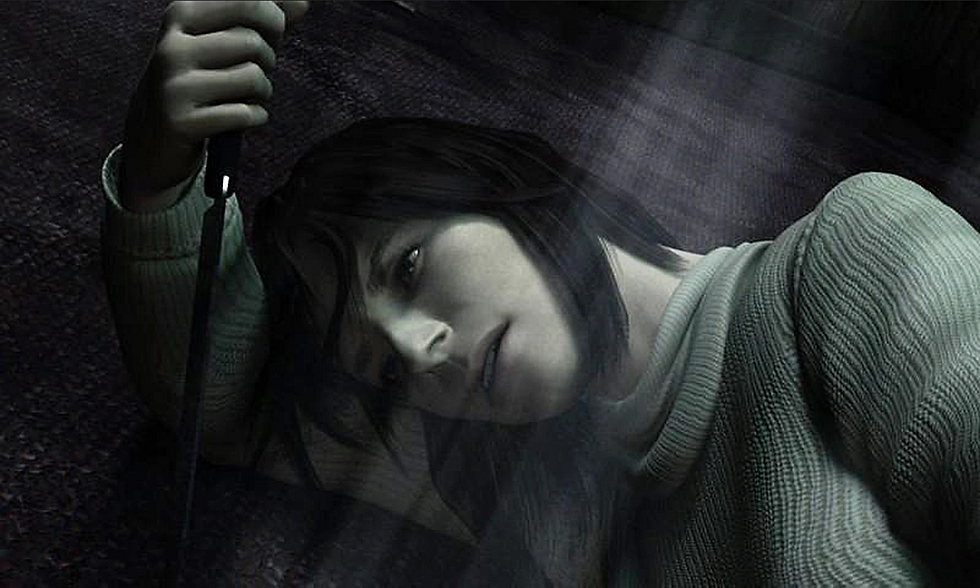
Now, giving a bit of credit to one of the few supporting characters in the game, who is Angela Orosco. Angela's backstory and actions are tragic as she is introduced to be a little similar to James, as she is also looking for someone who has gone missing, her mother. She seems to almost interrupt James at times, having outbursts of emotions such as saying "No! I've been bad..." surprising James as a result. She also accuses James of being a womanizer for simply showing her empathy and courtesy for being in a similar situation as him. Throughout the game you encounter various monsters and creatures to which, you encounter a monster bound to a door simply known as a "Doorman" to which is introduced in a graphic room made from human flesh, to which Angela claims it's her childhood room. Then as the Doorman descends from the ceiling, Angela yells "No Daddy!" And as James nearly kills the Doorman, Angela delivers the final killing move, Angela displays PTSD from her trauma as her father "forced her to do things in her room" and that her mother ran away from home years ago (Angela is speaking as if her mother is in the room) and that she "deserved it." Angela is then shortly seen in a burning, idle in the staircase. As James approaches her, he says, "It's hot as hell in here." To which Angela responds with, "You see it too? For me, it's always like this." Juxtaposing the way Angela's home life is portrayed and how she suffered through most of it, presuming through all kinds of abuse, including mental and sexual abuse. Angela then is last seen ascending the staircase and disappearing through the smoke and fire. Personally, I thought of this was similar to Jacob's Ladder (1990) as Angela is last seen "being at peace" when she ascends the ladder, knowing and accepting her past to where she goes into her room to contemplate her choices. But it seems like Masahiro Ito, the game's art director and the sole monster designer, stated in a series of tweets about the game that Angela dies after she ascends the staircase, with fans assuming she commits suicide. I'm split with this idea of Angela committing suicide because it goes in line with the arguable, "definitive" ending of the game but don't make sense as she kills the Doorman, the horrific remains of her father, her oppressor, as if she does not take any satisfaction and relief in doing so. So I enjoyed discovering who Angela was in this game's story as she is the first person James interacts with when arriving at Silent Hill, who is almost an anchor that sets the tone of the story which is as mysterious aura for Silent Hill and James himself.
REVELATION
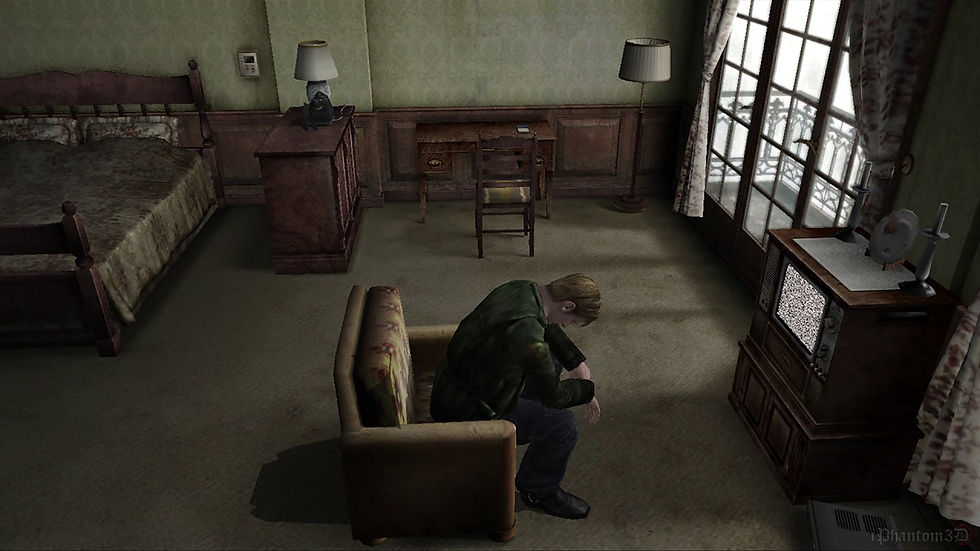
The revelation of Mary's demise strikes James as his "special place" being the Lake View Hotel (which Maria exclaimed, "that would be your special place...") has an unclaimed videotape from the lobby office recorded from his hotel room that he stayed in with Mary. He then finds the videotape and goes back to his former hotel room, finding out that James, himself, strangles and murders Mary. A powerful moment is in the aftermath, James is silently sitting in front of the TV, looking at the floor in between him and the TV. Laura, an 8-year-old girl who seems to have known Mary when she was sick in the hospital, goes into the room where James is lamenting his actions, and pleads him to go look for Mary. James tells Laura that he, himself, has murdered Mary, to which Laura exclaims, "you're a liar!... You're a murderer!" The innocence of a child is juxtaposed with James but more specifically, James' family as he only had Mary, but Laura almost represents any children they could've had as Laura since the beginning is close with Mary and says "I just saw her last week," when James asks her about Mary at first. Just before James leaves the hotel room however, he hears the TV static grow louder with a familiar voice calling James' name, asking to be saved by him, this voice seems to be Mary's voice... This is where the game develops into the ending portion, where James tries to remember what was the motivation of him doing such an atrocity. Depending on your actions throughout the game, there are many factors that contribute to the ending you get, but there are some occurrences that are similar throughout all the endings. James finds out through recordings in the hotel that he plead for mercy when the doctor told him Mary's days are numbered. He asked the doctors if there was anything else they can do, to the point of anger where he says, "you’re doctors, damn it! You're supposed to save people!" To where the doctor replies, "we've done everything it can, spend her final days wisely." James in one of the final hallways of the game, the hears Mary's anger toward her, feeling like her life is being taken away from her so soon. You as the player can decide if you want to hear this tirade or not, leading to the "Maria" ending. After the aforementioned "Pyramid Heads" boss fight after they kill Maria for the final time, a long staircase in what appears to be an abandoned construction site leads to what seems to be Mary looking outside a window. As James approaches her, this is where the ending is changed.
Considerably the "best" ending that is programmed by the developers, as it is the first in-game listed ending, is the "Leave" ending. This has James approach "Mary" but finds out it's Maria wearing Mary's clothing, and claims "you killed Mary, can't you see that?!" leading Maria to mutate into a monster encased in a metal frame sending out insects and tentacles to attack James. She is then killed by James, where the gameplay ends and the cinematic endings occur. In the "Leave" ending, it fades to the bed where James originally strangled Mary to death, but is talking to Mary during her final moments of life. Mary forgives James for killing her, but James powerfully says, "the truth is I hated you..." he expresses his anger towards Mary, the unfocused anger towards Mary which in reality realizes, it's an anger for Mary's disease. James is heartbroken that is wife is being taken away from him and felt powerless until him and Mary decided that James should "make Mary's suffering end sooner" with Mary insinuating that she let James kill her. She then goes on and tells James to make the best of his life, where it cuts to Mary's full message to James from the beginning of the game ending with "James, you've made me happy." And in the landscape of a graveyard, we see James walking across the graveyard with Laura skipping happily across it. Arguably, this is the "best" ending more in terms of the best outcome for James, but many argue, even to the people of the developers, and their intentions for what the ultimate ending should be, they mostly say the "In Water..." ending is the true ending.
This was the ending I got in the game, and it made the game much more impactful. And the game has much more allusions to what will happen to James as there is a suicide note James is supposed to read on top of the hospital, and a message in a bar Mary and James used to frequent saying "If you ReaLly wAnt to sEE Mary, you shOUld just DiE. But You mIght be hEadiNg to A diffErent place than MARY, James," insinuating Heaven for Mary, and hell for James due to what James has done to Mary... The main thing to achieve this ending is to view the knife Angela gives you when she contemplates on doing self harm, and to constantly re-read Mary' letter, the one that got James to think Mary is still alive and is located in Silent Hill. The best aspect of storytelling is done with this letter as after certain events of the game, the letter changes. At first the ink from the letter is rubbed off and no longer visible, then after viewing the tape, the paper disappears from the inventory, and after the final encounter with the "Pyramid Heads," the envelope the letter was contained in, disappears highly suggesting Mary's letter was a psychological construct of James and his guilt to get him to experience his own terrors in Silent Hill. Everything is the same to the lead up with the "Mary" boss fight, but afterwards when James is talking to Mary, she dies in front of James from what appears to be a heart attack. James slowly weeps and picks up her lifeless body and exits the room. The screen fades to black, with only audible sounds of James starting up his car and racing along the streets saying that he's nothing without Mary, with the peak of his speed having the sounds of the car stop with James saying "Now we can be together..." with the screen fading to a shot of under the surface of a body of water, with Mary reciting the letter she wrote to James. The game tells a better story with James and how his guilt of killing Mary drives him to suicide because even though it may be said he killed her due to how s his love was for her, but still is guilt-ridden for murdering her in the first place. I also understand how someone can be heartbroken when their spouse passes away to the point of contemplating suicide as when married, the saying of "till death do us part" has couples portray the meaning of when they both pass on, not just one of them...
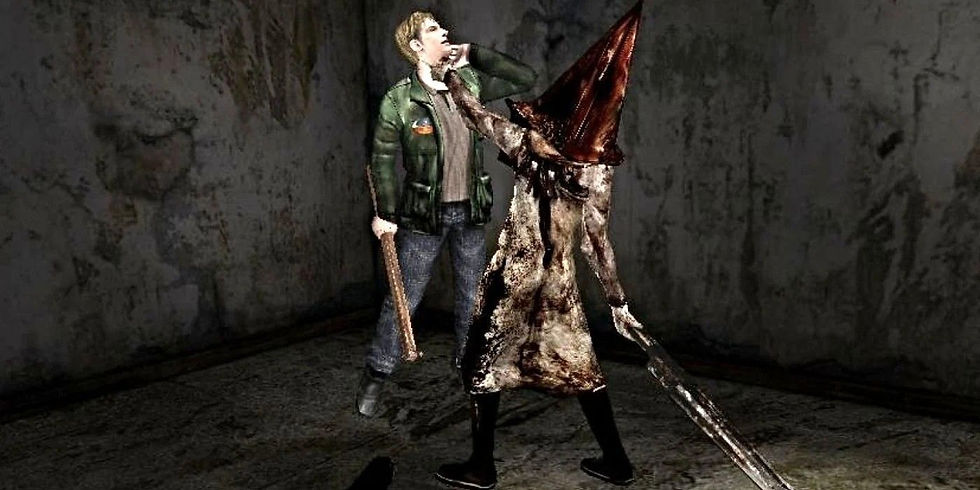
To me and to many, James committing suicide makes sense in this story as his love for Mary and the many horrors he faces are all related to Mary, which makes their bond much more stronger. The fact that Maria, is a more promiscuous representation of Mary from James and how she keeps coming back to life and being murdered from the "Pyramid Head" goes in line with the sexual frustrations that have potentially phased through James during his processing of Mary's absence, but also the immense guilt he is still facing for murdering Mary, perhaps contemplating if their decision was right. Unlike other games with multiple ending that have a definitive "good" or "bad" ending (such as Silent Hill 1), Silent Hill 2's endings are up to the player's interpretation to overall understand which one is better suited for the experiences they have endured and what is a more personal "understandable" ending for the protagonist, James. Seeing as many people who have worked on the game explain how the "In Water..." ending is the definitive ending, I like to point out Masahiro Ito's decision on this ending being definitive. Ito, being the lead monster and creature designer for the game, makes me feel like his explanation of the ending trumps all debates on what ending is considered "canon" as he claims that the brutal nature of the Pyramid Head and everything from how he is designed, his placement in the game's story, and to the weapons he carries throughout the game to attempt to kill James and Maria, were all designed in development, with Ito believing the "In Water..." ending was where Pyramid Head was the leading antagonist. Pyramid Head essentially is James. Pyramid Head is the physical manifestation of the guilt and murderous intent that ended up taking Mary, and which this I always think about how Ito has disdain at times for even creating Pyramid Head as he says he is "misused" in other Silent Hill media. I wholeheartedly agree with Ito's sentiment as James is Pyramid Head, but starting with the Silent Hill (2006) movie, where Pyramid Head is portrayed in the movie as a nameless, 7 foot tall, brute who mindlessly kills anything in its path which was carried over in the Silent Hill Homecoming (2008) video game, which completely goes against both the design and intent Ito had when creating Pyramid Head as in Silent Hill 2, he parallels James' build and can barely swing his signature weapon, the Great Knife. Meanwhile, in the film adaptation and Homecoming, Pyramid Head swings the Great Knife like a fencing sword. But I digress, I want to briefly discuss a sect of fans who debate which ending is canon or not, to which I believe that Ito and I concur with the debate of the endings being a little farcical as there are multiple endings for the sake of the player to decide, otherwise the game would've been structured similarly like Silent Hill 1 where that is the only game that has a definitive ending in the series.
For a game released in 2001, Silent Hill 2 provides a practically timeless story that would get any first time player of the story completely engaged and in for surprises due to the twists and turns the story beautifully provides. James being the "every man" archetype of a character makes you instantly relate to him which is why I think the game holds up in high regard as James is a relatable character, as many would take a chance to reunite with a loved one who has passed on, if given the chance. However, ultimately, I believe Silent Hill as a town lets the game's writers and many other people involved with the design process, correlate itself to the main character's suffering throughout the series. Silent Hill as a series is about "facing your fears" and where most movies or video games use this tagline for the abstract and crazy monsters the audience might see, Silent Hill 2 has James facing psychological horror created from his suffering and psyche that is exceptionally accessible to anyone who is looking for an amazing experience. I am genuinely grateful for experiencing a game like this because it did make me think of my own trials and tribulations I have faced in my life and what I am facing now which is why this game was so aesthetically pleasing, and I encourage you to experience the game for yourself to see the majesty Team Silent has enveloped in their magnificent experience.


